Best Video Editing Software
Top Tools Compared for 2026
14
min read
Oct 11, 2024
Buyer's Overview
Video is everywhere in business these days. Whether you're training your team, showing off your latest product, or trying to grab some eyeballs on social media, video is the way to go. But here's the million-dollar question: which video editing software should you use?
The choices can be overwhelming. While Adobe Premiere Pro is still the heavyweight champ for professional production, we're now swimming in options. There are AI-powered editors that practically do the work for you, simple screen recorders for quick captures, and everything in between. No wonder people get stuck just trying to choose!
What makes this decision harder is that each solution frames itself as "the ultimate video editor" while actually serving distinctly different use cases. Some are perfect for creating those cinematic masterpieces, others are built for quick team updates, and some focus on polished business content. It really depends on what you're trying to achieve.
To help you cut through the noise, we've thoroughly tested the top leading contenders. We'll walk you through everything from their professional features to their AI capabilities, so you can find the perfect match for your needs.
Understanding the Current Video Editing Landscape
Video editing software broadly falls into one of four categories, each designed for specific use cases:
Professional Production Editors
Tools like Adobe Premiere Pro that provide comprehensive editing capabilities for high-end video production. These tools excel at cinematic content creation but typically have the steepest learning curves.
AI-Enhanced Product Video Platforms
Newer platforms like Clueso that use artificial intelligence to automate complex editing processes and generate professional product videos with minimal technical expertise.
Audio-First Editors
Solutions like Descript that approach video editing through audio and transcript editing, making it easier to create conversational or narration-heavy content.
Screen Recording Focused Tools
Applications like Loom and Camtasia that specialize in capturing on-screen activity, primarily for tutorials, demonstrations, and internal communications.
The key is understanding which category best serves your primary video creation needs, then evaluating the specific features within that category.
What Kind of Video Editing Software Do You Actually Need?
Not all video editing software is built for the same workflow.
Traditional editing platforms like Adobe Premiere Pro, Final Cut Pro, and DaVinci Resolve are designed for professional video production. They offer advanced timeline editing, color grading, motion graphics, audio mixing, and cinematic post-production controls. But they also come with steeper learning curves and significantly more manual editing work.
Clueso approaches video creation differently.
Rather than functioning as a general-purpose video editor, Clueso is an AI-powered product video platform built for teams creating software walkthroughs, onboarding videos, training content, and product demonstrations. Instead of manually editing timelines frame-by-frame, users can record their workflow, generate AI narration, add visual highlights automatically, and publish both videos and documentation together.
That distinction matters because the “best” video editing software depends entirely on what you’re trying to create. This guide covers both categories so you can choose the right workflow for your team rather than simply the most feature-heavy editor.
Social Media Video Optimization
Teams now need to optimize content for multiple platforms simultaneously — each with different aspect ratios, captioning requirements, and audience expectations.
A workflow that works for YouTube may not work for TikTok or Instagram Reels. That’s why modern video editing software increasingly includes built-in support for vertical video, automatic captions, platform-specific exports, and AI-powered resizing.
Vertical vs Horizontal Video
Different platforms prioritize different formats:
Platform | Recommended Aspect Ratio |
|---|---|
TikTok | 9:16 (Vertical) |
Instagram Reels | 9:16 (Vertical) |
YouTube Shorts | 9:16 (Vertical) |
Standard YouTube | 16:9 (Horizontal) |
1:1 or 16:9 | |
Product Tutorials & Training | Usually 16:9 |
Tools like CapCut and VEED are heavily optimized for vertical social content, while traditional editors like Premiere Pro and Final Cut Pro offer more flexible manual control for multi-platform exports.
Automatic Captions & Subtitles
Captions have become essential across nearly every platform. It is not only for accessibility, but also because many users watch videos without sound.
Modern editing platforms increasingly offer:
AI-generated subtitles
Multi-language captioning
Auto-translations
Burned-in captions for social platforms
Tools like VEED and CapCut stood out for fast social caption workflows, while Descript performed particularly well for transcript-heavy educational and webinar content.
Platform-Specific Export Workflows
Many modern editing tools now include presets for different tools like TikTok, Instagram, YouTube, LinkedIn as well as a variety of content types like webinar recordings or product videos.
These presets simplify exporting the correct dimensions, compression settings, and aspect ratios without requiring manual adjustments each time.
Where Clueso Fits
Clueso is optimized less for social-first editing and more for product education, onboarding, and training workflows. However, Clueso's video editing features and export flexibility still makes it useful for teams repurposing walkthrough videos across multiple channels.
For example, teams can:
create full-length onboarding videos for help centers or customer education
generate shorter clips for social sharing
add AI voiceovers and captions automatically
maintain consistent branding across training and marketing content
Because Clueso is built around screen recordings and product demonstrations, it’s especially effective for software companies that need to distribute educational content across documentation portals, support centers, LinkedIn, and YouTube simultaneously.
AI Video Editing Features
AI has fundamentally changed how modern video editing software works. But not every platform uses AI in the same way.
Some tools focus on automating editing workflows, while others specialize in captions, avatars, templates, or narration generation. Understanding these differences is important because the top AI video generators depends entirely on the type of videos you create.
AI Script & Voiceover Generation
Some platforms reduce production time by automatically generating narration and scripts from existing content or screen recordings.
Clueso
Clueso uses AI to transform screen recordings into polished product videos with automatically generated narration, zoom effects, highlights, and documentation. Instead of manually scripting every scene, teams can record workflows and let the platform generate structured walkthrough content automatically.
AI Text-Based Editing
Some AI editors focus less on automation and more on simplifying the editing process itself.
Descript
Descript approaches AI editing through transcript-based workflows. Users can edit videos by editing text transcripts, making it particularly effective for podcasts, webinars, interviews, etc. Its AI features also include filler-word removal, voice cloning, and automatic transcription.
AI Captions & Social Optimization
Some platforms prioritize AI features designed for social publishing workflows, such as video caption generator.
VEED
VEED focuses heavily on AI-powered captions, subtitle generation, translations, and lightweight editing automation. The platform is optimized for creators and marketing teams producing quick-turn social content across multiple platforms.
AI Templates & Automated Social Content
Some editors use AI primarily to accelerate content creation through templates and auto-formatting.
CapCut
CapCut’s AI features focus on speed and accessibility, especially for TikTok, Instagram Reels, and YouTube Shorts workflows. Features like AI templates, auto-captions, background removal, etc. make it easy to produce large volumes of short-form content quickly.
Choosing the Right AI Workflow
The biggest difference between AI video platforms is not simply “which tool has AI.” It’s what the AI is actually helping you do.
If you want AI-generated product walkthroughs and onboarding videos, Clueso is optimized for that workflow.
If you want transcript-based editing, Descript is stronger.
If you need AI captions and lightweight social editing, VEED performs well.
If you’re focused on short-form creator content, CapCut’s template-driven workflow is often the fastest.
As AI editing tools continue evolving, the most effective platforms are increasingly becoming workflow-specific rather than trying to solve every type of video production at once.
Best Free Video Editing Software Options
Not every team needs an enterprise-grade editing suite right away. In fact, many startups and small businesses begin with free video editing software before upgrading to more advanced workflows.
The good news is that several free tools now offer surprisingly capable editing features — from AI captions to professional color grading.
DaVinci Resolve
DaVinci Resolve is widely considered one of the most powerful free video editing platforms available today. Even its free version includes professional-grade color correction, motion graphics, audio editing, and advanced timeline controls that rival premium editing suites.
iMovie
iMovie remains one of the simplest free editing tools for Mac, iPhone, and iPad users. Its clean interface and drag-and-drop workflow make it approachable for beginners creating school projects, presentations, YouTube videos, or internal business content.
CapCut
CapCut has rapidly become one of the most popular free video editing tools for short-form and social media content. The platform includes mobile and desktop editing, AI captions, templates, effects, background removal, and vertical-video optimization for TikTok, Instagram Reels, and YouTube Shorts.
Top Video Editing Solutions Compared
Let's look at how these leading video editing solutions compare across essential features and capabilities:
Features & Capabilities | Clueso | Adobe Premiere Pro | Descript | Camtasia | Loom | DaVinci Resolve | Final Cut Pro | CapCut | iMovie | VEED |
|---|---|---|---|---|---|---|---|---|---|---|
Core Recording | ||||||||||
Screen Recording | ✓ | ✓ | ✓ | ✓ | ✓ | ❌ | ❌ | ✓ | ❌ | ✓ |
Upload pre-recorded videos | ✓ | ✓ | ✓ | ✓ | ❌ | ✓ | ✓ | ✓ | ✓ | ✓ |
AI Capabilities | ||||||||||
AI Script Generation | ✓ | ❌ | ❌ | ❌ | ❌ | ❌ | ❌ | ✓ | ❌ | ✓ |
AI Voiceover | ✓ | ❌ | ✓ | Basic | ❌ | ✓ | ❌ | ✓ | ❌ | ✓ |
Auto Article Generation | ✓ | ❌ | ❌ | ❌ | ❌ | ❌ | ❌ | ❌ | ❌ | ❌ |
AI Image Generation | ✓ | ✓ | ✓ | ❌ | ❌ | ❌ | via Image Playground | ✓ | ❌ | ✓ |
AI Motion Graphics | ✓ | ❌ | ✓ | ❌ | ❌ | ❌ | ❌ | ❌ | ❌ | ✓ |
Professional Features | ||||||||||
Custom Branding | ✓ | ✓ Manual | ❌ | ✓ Manual | ❌ | ✓ | ✓ | ✓ | ❌ | ✓ |
Audio-video sync | ✓ | Manual | ✓ | Manual | ❌ | ✓ | Basic | Basic | Manual | Manual |
Auto Visual Effects | ✓ | ✓ | ❌ | ✓ | ❌ | ✓ | ✓ | ✓ | ✓ | ✓ |
Transcript Editing | ✓ | ❌ | ✓ | ❌ | ❌ | ✓ | ❌ | ✓ | ❌ | ✓ |
Content Management | ||||||||||
Easy Updates | ✓ | ❌ | ❌ | ❌ | ❌ | ❌ | ❌ | ❌ | ❌ | ❌ |
Multi-Format Export | ✓ | ✓ | ✓ | Limited | Limited | ✓ | ✓ | ✓ | ❌ | ✓ |
Pricing | ||||||||||
Starting Price | $120/mo for 2 editors | $10/mo per user | $12/mo per user | $179.88/year per user | $15/mo per user | Free | $129/year per user | Free | Free | $12/mo per user |
Clueso
Clueso represents the new generation of AI-powered video creation platforms specifically built for business use cases. Unlike traditional editors, Clueso automates much of the production process - from script generation to voiceovers and article creation - enabling teams to create professional content without technical expertise.

Key Features:
Dual output - professional video and step-by-step documentation
Prompt-based video creation wit AI
AI-powered script generation
Studio-quality AI voiceovers in 40+ languages
Clueprints: end-to-end video templates
Auto addition of visual effects like Zooms, Spotlights, Callouts
Automated branding and customization across all content
Image and motion graphics generation with AI
Multi-language support with AI-powered translations
Dynamic captions available in 20+ languages
Easy content updates without re-recording
Static slide deck to video conversion
Enterprise-grade collaboration and security features
What Users Say:
"Clueso helped us cut video editing time from 13–17 hours to just a few minutes. What once took an hour per minute of editing can now be completed in just a few minutes. The AI voiceover is a game-changer, eliminating reliance on mobile voice recordings and the tedious audio-video syncing process. With Clueso, everything is seamlessly streamlined into one single platform."
— Brooke Baldwin, Senior Client Support Specialist
💗 Best For: Teams creating professional business videos, product demos, training content, and customer education materials, especially those looking to scale content production efficiently.
Adobe Premiere Pro
Adobe Premiere Pro remains the industry standard for professional video production, offering unmatched creative control and a comprehensive editing environment. But all this power comes with a steep learning curve, making it hard to scale across teams for proficient use.
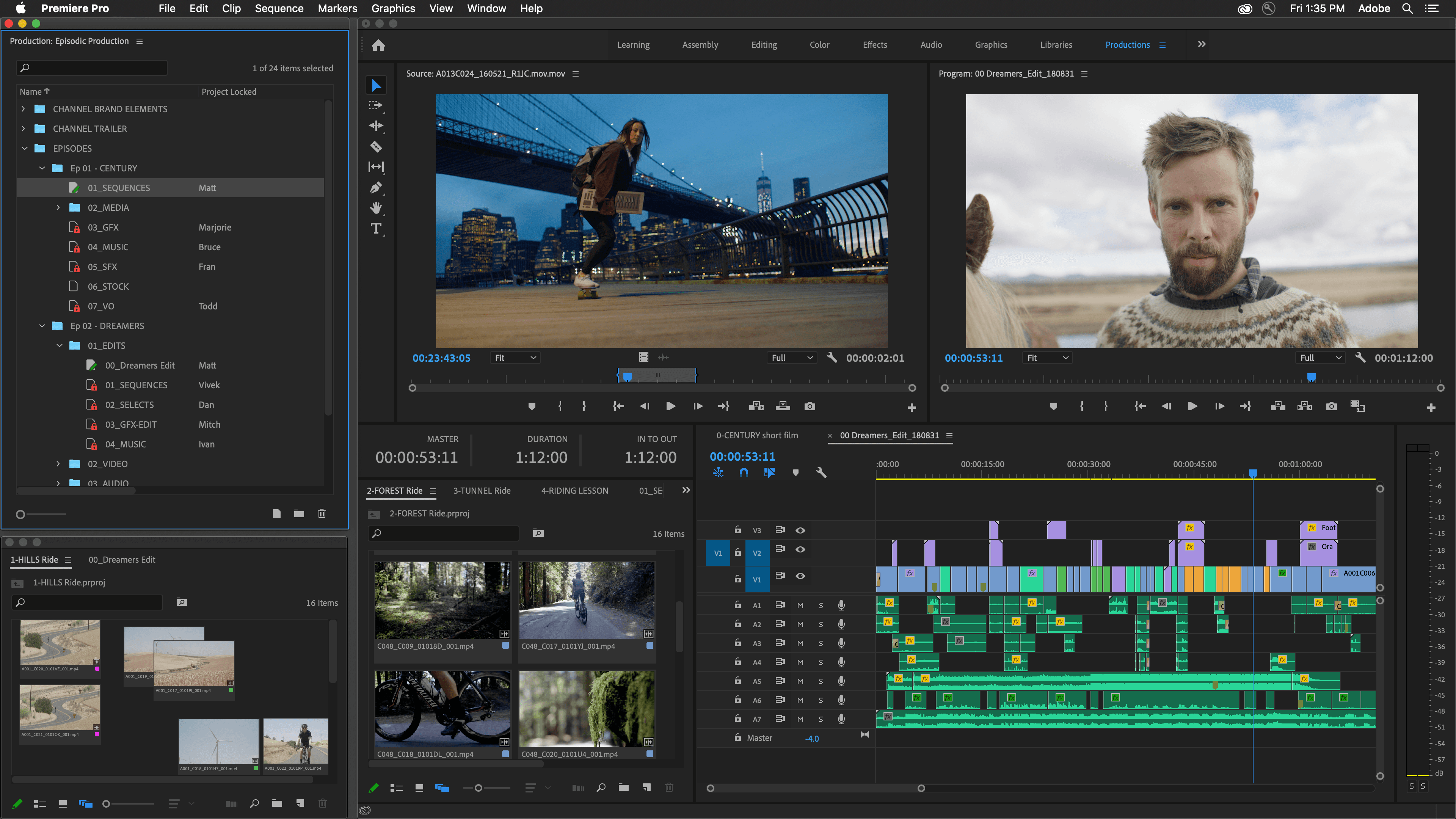
Source: Adobe Premier Pro
Key Features
Comprehensive editing tools for complete creative control
Professional color grading and visual effects
Industry-standard format support and export options
Precision audio editing and mixing
Advanced compositing capabilities
🟢 Pros | 🔴 Cons |
|---|---|
✓ Unmatched creative control and flexibility | △ Requires significant training |
✓ Industry-standard for professional video production | △ High hardware requirements for smooth operation |
✓ Extensive plugin ecosystem extends functionality | △ Monthly subscription costs add up over time |
✓ Powerful color grading and effects capabilities | △ Overkill for most basic business video needs |
✓ Seamless integration with other Adobe products | △ Inefficient for quick, iterative content creation |
💗 Best For: Professional video producers, marketing departments with dedicated editors, and teams creating high-end marketing videos that require sophisticated editing techniques.
Descript
Descript revolutionized video editing by treating it like document editing—editing the transcript edits the video. This approach dramatically simplifies certain video editing tasks, especially for content driven by spoken narration.
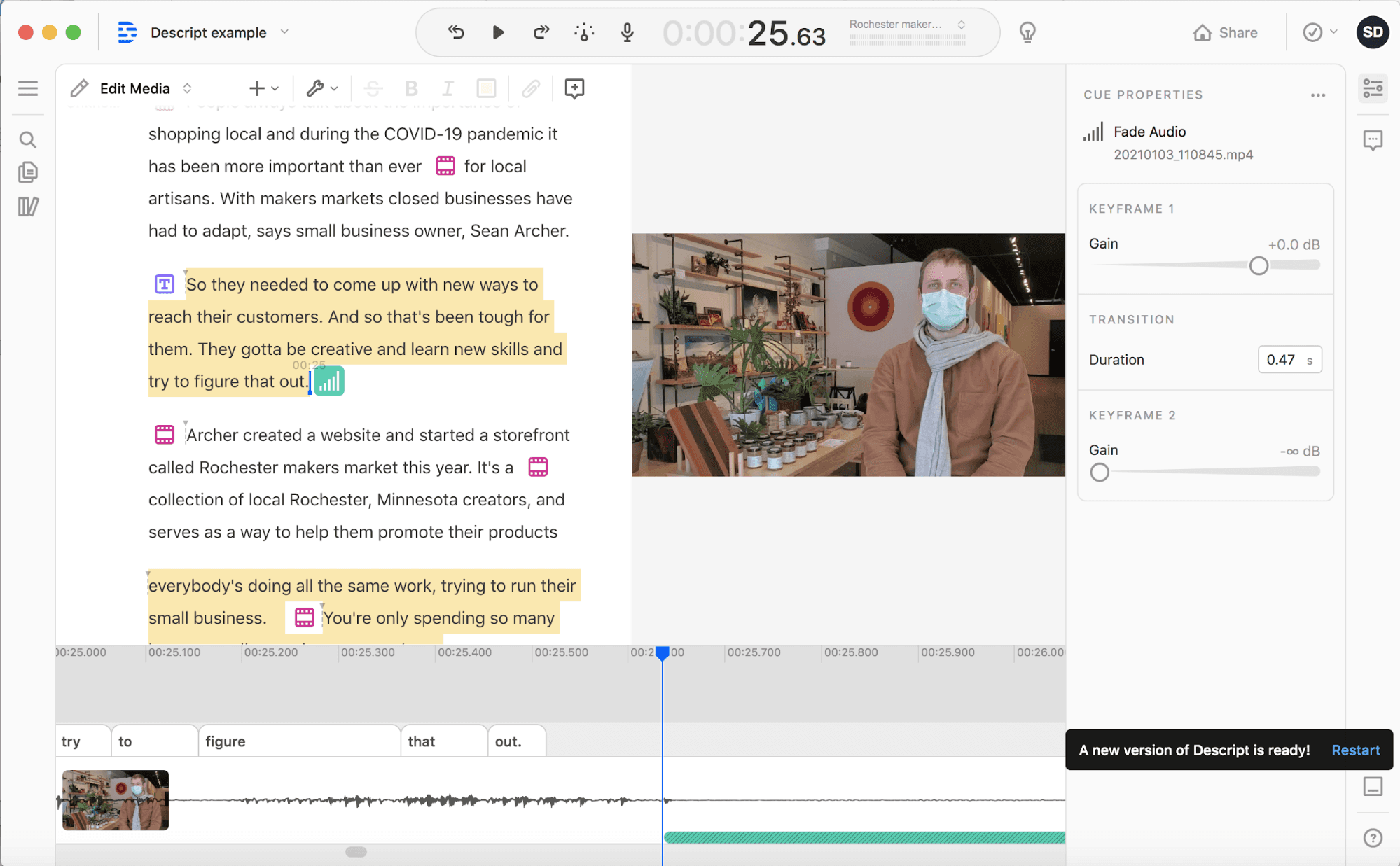
Source: Descript
Key Features
Transcript-based editing for editing video like docs
Seamless audio-video syncing.
Overdub feature to fix small audio mistakes or add lines without re-recording.
Filler word removal and content repositioning
Easy repurposing into multiple formats
🟢 Pros | 🔴 Cons |
|---|---|
✓ Intuitive text-based editing approach | △ Limited advanced visual editing capabilities |
✓ Web-based collaborative editing and reviewing | △ Basic screen recording features |
✓ Powerful filler word removal and audio correction | △ Less suitable for visually complex videos |
✓ Overdub voice cloning saves time on corrections | △ Limited branding and customization options |
✓ Well-suited for conversational content | △ No article generation capabilities |
△ Voice cloning for corrections is not smooth |
💗 Best For: Content creators producing conversational videos, podcasts, interview content, and narration-driven videos where precise word-level editing is important.
| 📖 Read more: Descript alternatives
Camtasia
Camtasia has long been the go-to solution for educational videos and tutorials, offering a balance of screen recording capabilities and editing tools focused on instructional content.
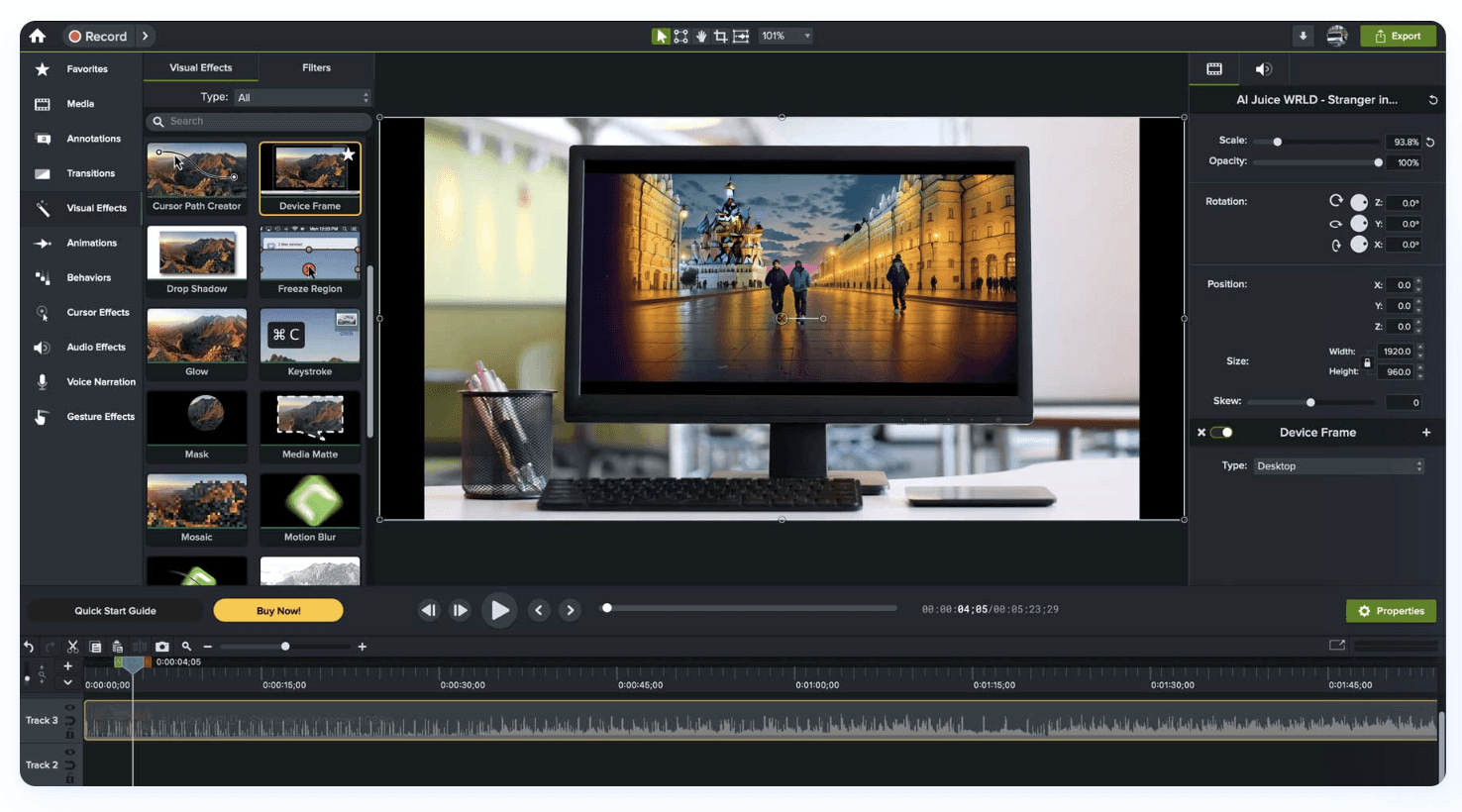
Source: Camtasia
Key Features
Robust editing suite
Integrated screen and webcam recording
Library of assets and templates
Interactive quiz and assessment features
🟢 Pros | 🔴 Cons |
|---|---|
✓ Strong screen recording and annotation features | △ Steep learning curve |
✓ Built-in assets for instructional videos | △ Updates require additional purchases |
✓ Timeline-based editor with transitions and audio mixing | △ Lacks AI-powered features and automation |
✓ Cursor and zoom-and-pan effects | △ Content updates require manual re-editing |
△ No documentation generation capabilities |
💗 Best For: Learning & Development teams, trainers, educators, and anyone creating instructional videos where screen recording is the primary focus.
| 📖 Read more: Camtasia alternatives
Loom
Loom transformed how teams communicate with asynchronous video. While not a full-featured editor, it excels at quick recordings for team communications.
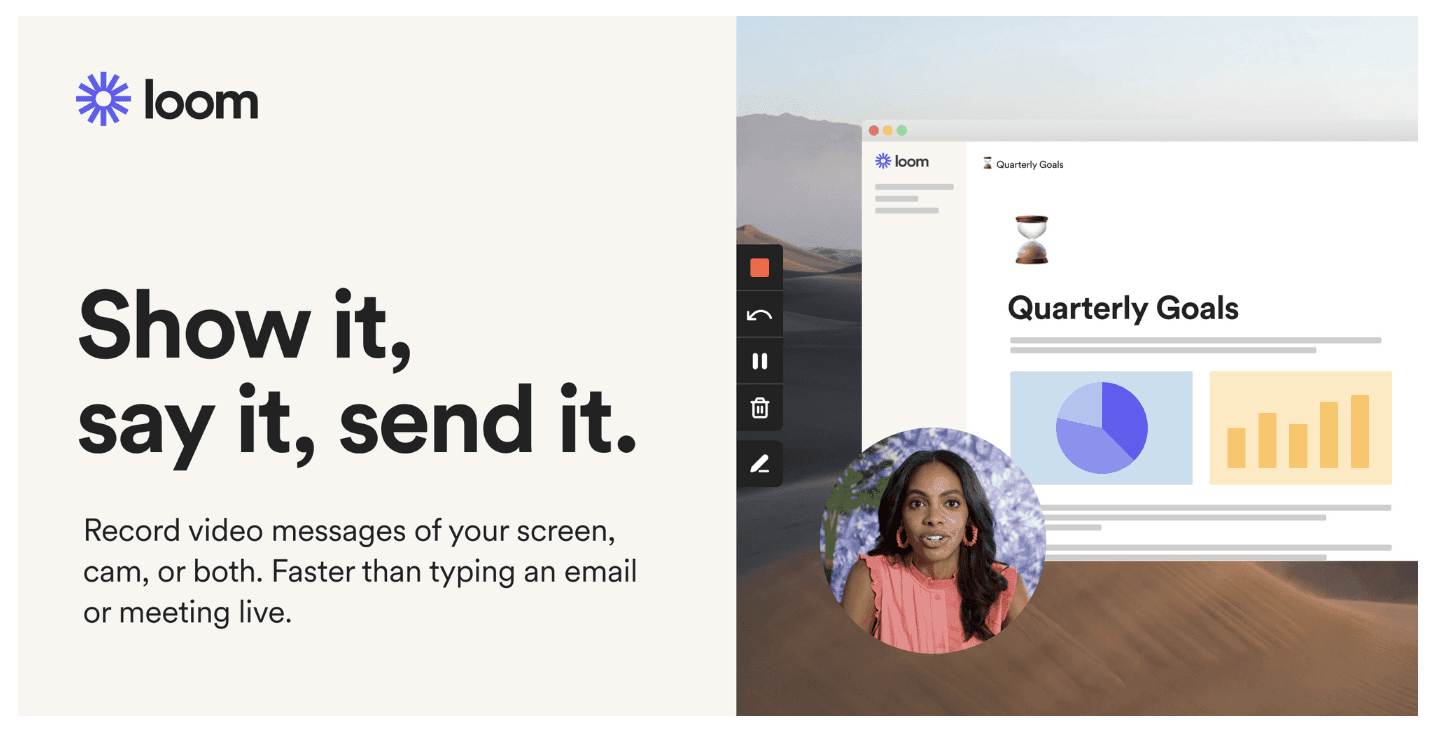
Source: Loom
Key Features
Instant recording with browser extension and desktop app
Quick sharing via generated links
Team library and organization features
Basic editing capabilities including trim and cut
Viewer insights and engagement analytics
Automated transcription and closed captions
🟢 Pros | 🔴 Cons |
|---|---|
✓ Extremely easy to use with minimal learning curve | △ Very limited editing capabilities |
✓ Perfect for quick, informal communication | △ No transcript editing |
✓ Cloud-based storage | △ No documentation generation |
✓ Engagement analytics to track viewer behavior | △ Basic branding and customization options |
✓ Free tier available for basic usage | △ Not suitable for professional external content |
✓ Good integrations with other workplace tools | △ No AI enhancement or automated features |
💗 Best For: Internal communications, quick explanations, team updates, and feedback where speed and convenience outweigh production quality.
| 📖 Read more: Loom alternatives
DaVinci Resolve
DaVinci Resolve stands out as one of the most powerful professional editing suites available — especially considering its free version includes advanced color grading, visual effects, and audio production capabilities. Originally built for high-end post-production workflows, Resolve has evolved into a complete editing ecosystem used across film, YouTube, and commercial production. However, its professional-grade toolset can feel overwhelming for teams simply trying to create onboarding videos or product walkthroughs quickly.
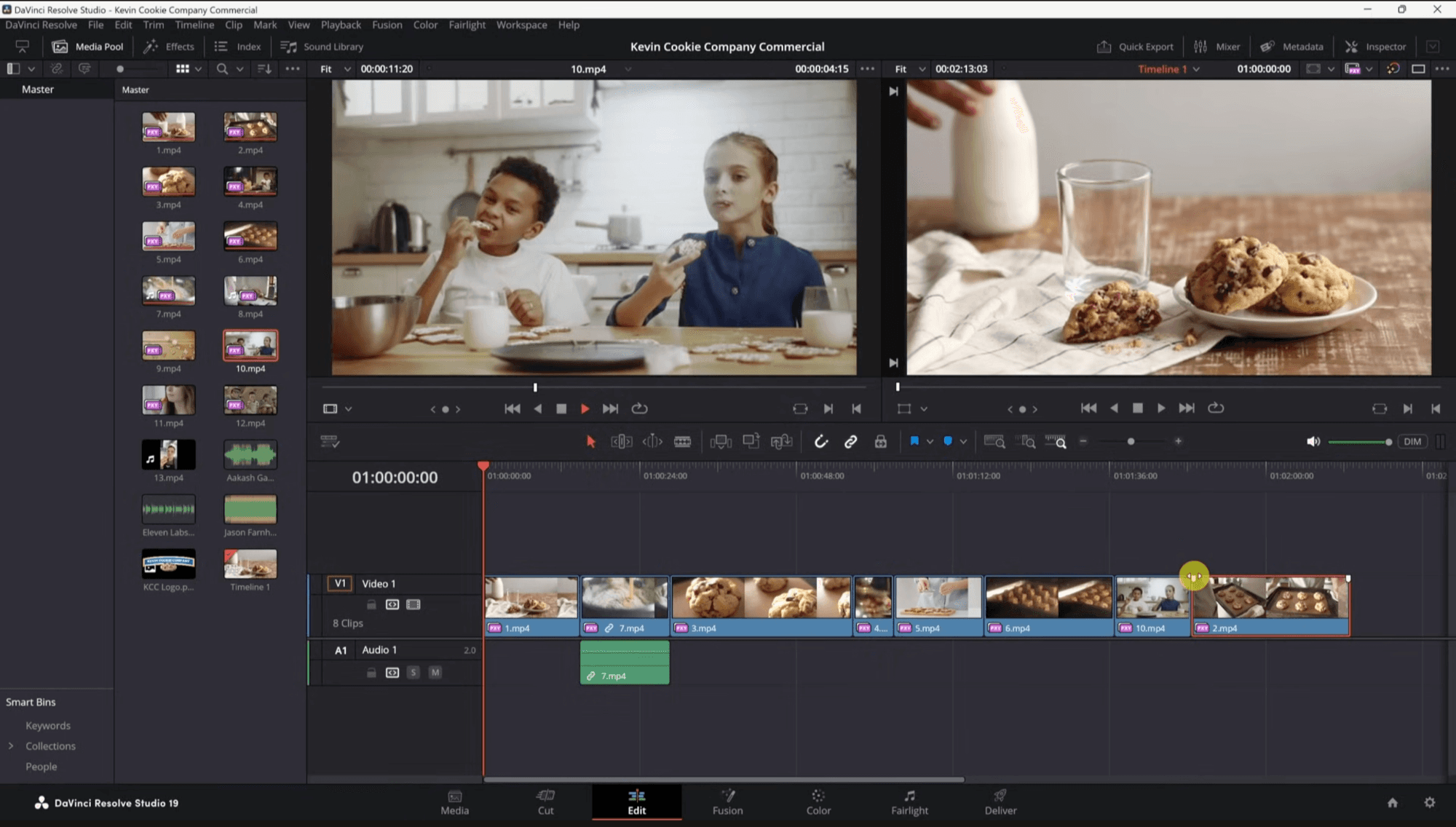
Source: DaVinci Resolve
Key Features
Industry-leading color grading tools
Advanced visual effects and motion graphics
Professional audio editing with Fairlight
Multi-user collaboration workflows
Free version with extensive professional features
🟢 Pros | 🔴 Cons |
|---|---|
✓ Exceptional free version for professional editing | △ Steeper learning curve than most editors |
✓ Best-in-class color grading capabilities | △ Requires powerful hardware for smooth performance |
✓ Strong audio and post-production workflows | △ Interface can overwhelm beginners |
✓ Suitable for cinematic and commercial projects | △ Overkill for basic business video workflows |
✓ All-in-one editing, VFX, and audio platform | △ Slower production workflow for iterative content creation |
💗 Best For: Professional editors, filmmakers, YouTubers, and creators who need advanced post-production and color grading capabilities.
Final Cut Pro
Final Cut Pro is Apple’s professional editing software built specifically for Mac users. Known for its performance optimization and magnetic timeline workflow, it offers professional-grade editing capabilities while remaining more approachable than some traditional enterprise editing suites. It’s especially popular among creators and production teams already working within the Apple ecosystem.
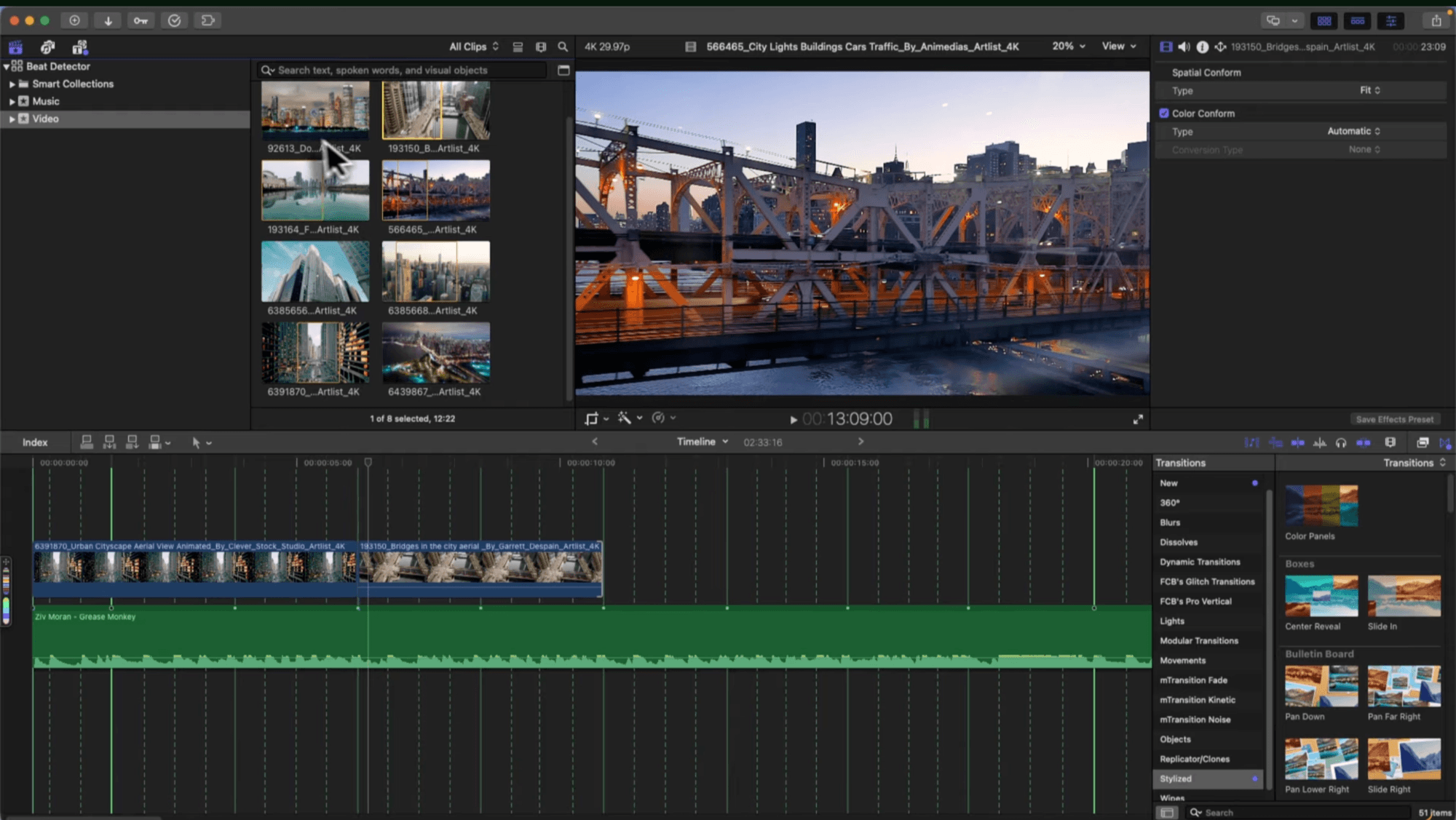
Source: Final Cut Pro
Key Features
Optimized editing performance for Mac hardware
Magnetic timeline for streamlined editing workflows
Advanced color grading and HDR support
Multi-camera editing capabilities
Professional export and rendering workflows
🟢 Pros | 🔴 Cons |
|---|---|
✓ Extremely optimized for Mac performance | △ Mac-only software limits accessibility |
✓ Faster rendering than many competing editors | △ Smaller plugin ecosystem than Premiere Pro |
✓ Professional editing without Adobe subscription | △ Collaboration workflows less robust for large teams |
✓ Cleaner interface than many traditional editors | △ Less suitable for AI-assisted workflows |
✓ Strong balance between power and usability | △ Not designed for automated documentation or training workflows |
💗 Best For: Mac-based creators, agencies, and professional editors who want powerful editing workflows without Adobe’s subscription model.
CapCut
CapCut has rapidly become one of the most widely used video editing platforms for short-form and social media content. Originally popularized through TikTok creators, the platform now offers both mobile and desktop editing workflows with AI-powered templates, captions, effects, and resizing tools. Its speed and simplicity make it particularly effective for teams producing large volumes of social-first content quickly.
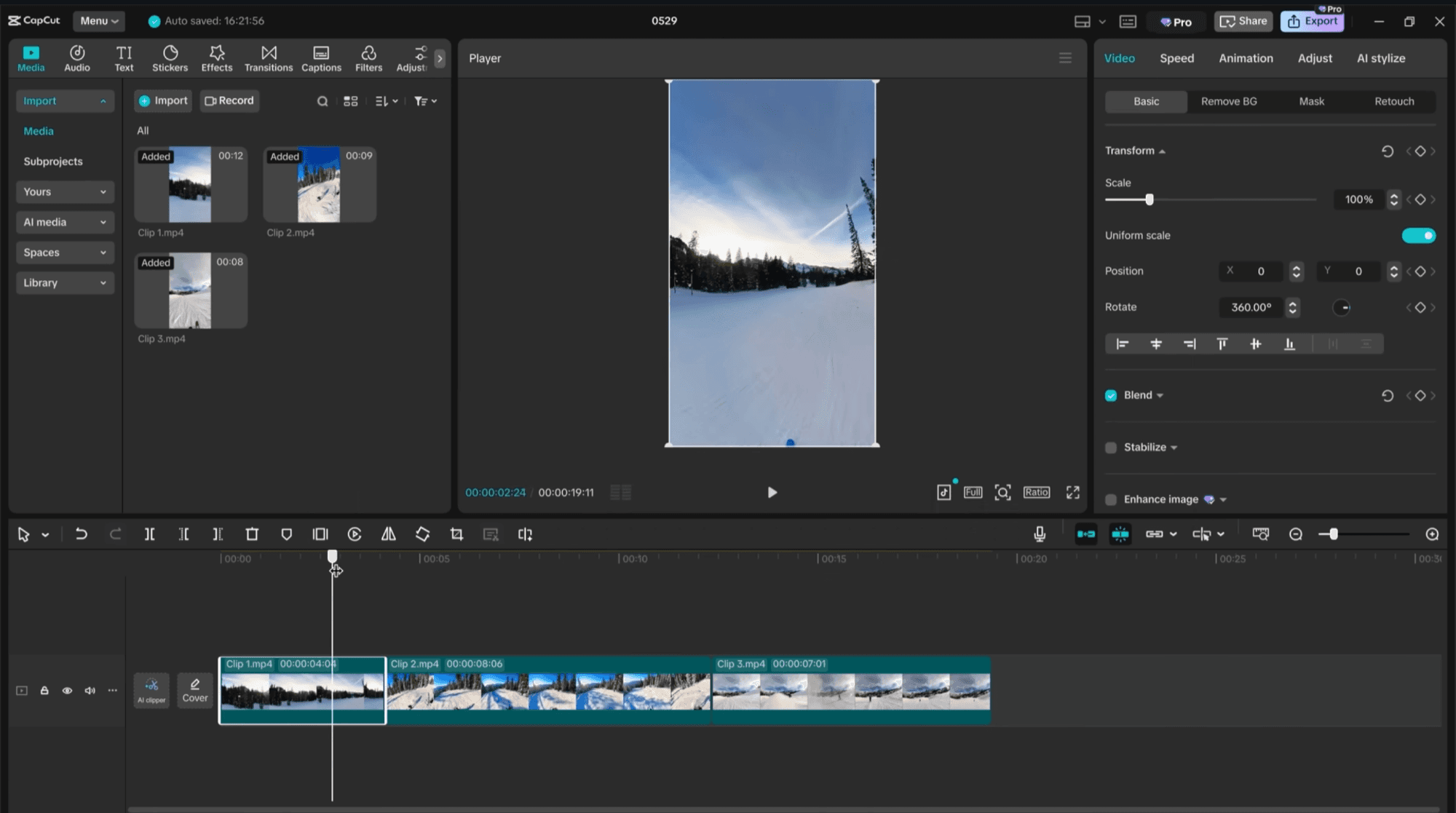
Source: CapCut
Key Features
AI templates and automated editing tools
Vertical video optimization for TikTok and Reels
Automatic captions and subtitle generation
Mobile and desktop editing support
Extensive effects, transitions, and music library
🟢 Pros | 🔴 Cons |
|---|---|
✓ Extremely beginner-friendly and fast to use | △ Limited advanced editing precision |
✓ Excellent for social-first video workflows | △ Less suitable for long-form professional editing |
✓ Strong AI captioning and template features | △ Branding customization can feel limited |
✓ Free plan includes many useful editing features | △ Not optimized for structured training or onboarding content |
✓ Optimized for vertical and mobile content creation | △ Export quality and workflow control more limited than professional suites |
💗 Best For: Social media creators, marketers, and teams producing TikTok, Reels, Shorts, and other short-form vertical videos.
iMovie
iMovie remains one of the easiest ways for beginners to start editing videos, especially within Apple’s ecosystem. Its drag-and-drop interface and lightweight workflow make it approachable for users creating presentations, YouTube videos, internal communications, or personal projects. While it lacks advanced production capabilities, its simplicity continues to make it a popular entry point for first-time editors.
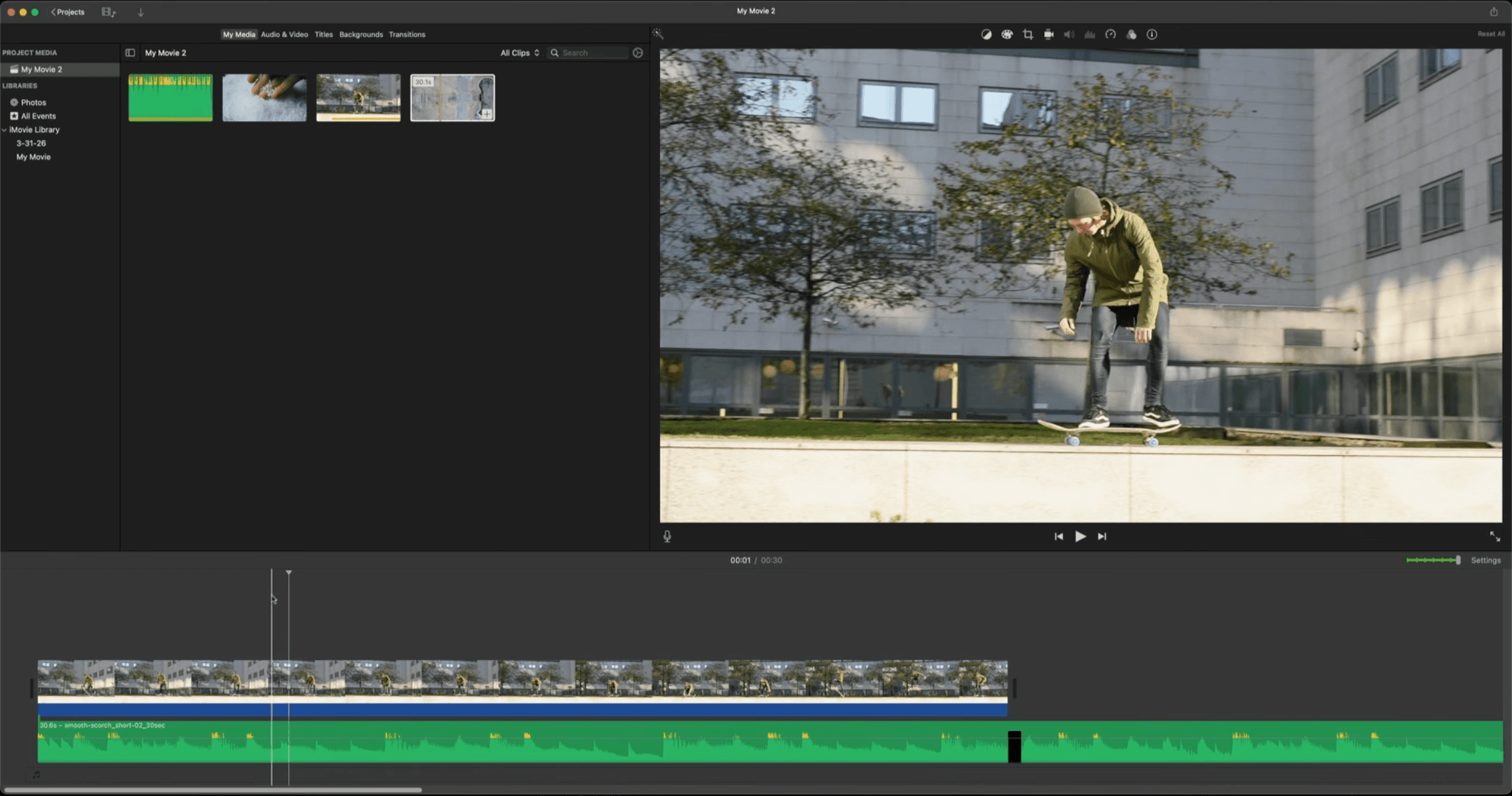
Source: iMovie
Key Features
Beginner-friendly drag-and-drop editing
Built-in transitions, titles, and templates
Native Mac, iPhone, and iPad support
Basic audio editing and soundtrack tools
Simple export and sharing workflows
🟢 Pros | 🔴 Cons |
|---|---|
✓ Extremely easy to learn and use | △ Very limited advanced editing features |
✓ Free for Apple users | △ Mac and iOS only |
✓ Smooth integration across Apple devices | △ Minimal customization and effects capabilities |
✓ Lightweight and fast for simple projects | △ Not suitable for professional production workflows |
✓ Great for educational and internal videos | △ No advanced AI editing or automation features |
💗 Best For: Beginners, educators, students, and Apple users looking for simple video editing software without a steep learning curve.
VEED
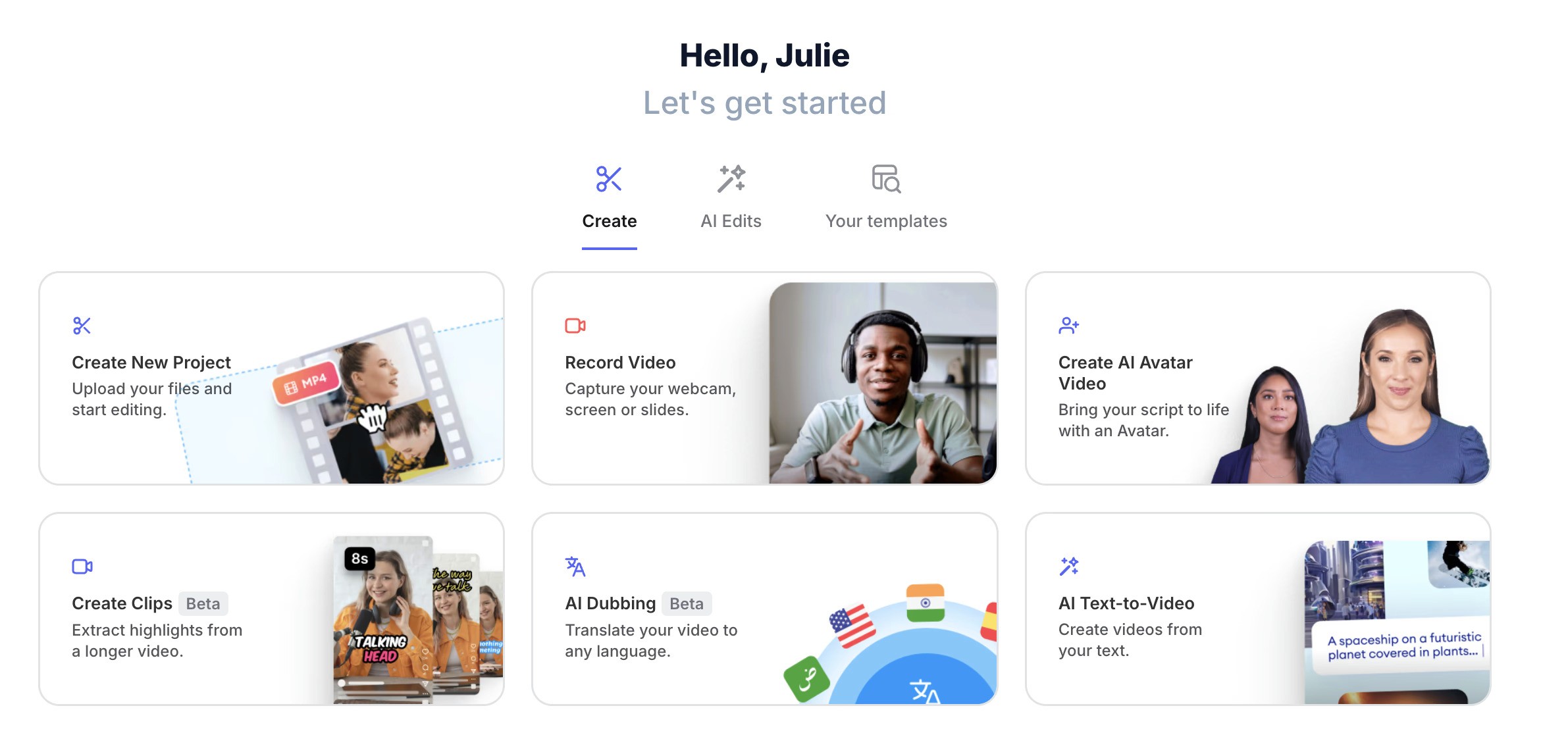
VEED combines lightweight video editing, AI-powered automation, and browser-based collaboration into a workflow optimized for modern content teams. Unlike traditional editing suites that require extensive timeline editing, VEED focuses on speed — making it especially popular for marketing teams, creators, and businesses producing social media content, explainers, and quick-turn videos. Its built-in AI tools for subtitles, translations, and resizing make it particularly effective for multi-platform publishing workflows.
Source: Veed
Key Features
AI-generated subtitles and translations
Browser-based editing with collaborative workflows
Built-in templates for social and marketing videos
Screen recording and webcam capture
Social-media-ready exports and aspect ratios
🟢 Pros | 🔴 Cons |
|---|---|
✓ Extremely accessible with no software installation required | △ Limited advanced timeline editing capabilities |
✓ Strong AI subtitle and captioning workflows | △ Less suitable for cinematic or high-end production work |
✓ Fast exports for social and marketing content | △ Browser performance can slow with larger projects |
✓ Built-in templates simplify content creation | △ Limited precision compared to professional editing suites |
✓ Supports vertical, square, and horizontal formats easily | △ Not optimized for detailed product walkthrough workflows |
✓ Easy collaboration and sharing for distributed teams | △ Advanced customization options can feel restrictive |
💗 Best For: Marketing teams, creators, startups, and businesses producing social media videos, explainers, webinars, and fast-turnaround marketing content across multiple platforms.
Use Cases and Solutions: Finding the Right Tool for Every Team
Different departments have distinct video editing requirements and face unique challenges. Let's explore how each tool addresses the specific needs of different teams.
Marketing Teams
Marketing professionals need to create compelling, on-brand videos that drive engagement across multiple channels. From product launches to social campaigns, their content must maintain consistent quality while adapting to evolving strategies.
Primary Needs: Brand consistency, professional quality, multi-channel assets, content repurposing
Solutions Needed:
Advanced branding capabilities with customizable templates
Professional-looking transitions and effects
Multi-format export for different channels
Time-saving automation for faster production
Features | Clueso | Adobe Premiere Pro | Descript | Camtasia | Loom | DaVinci Resolve | Final Cut Pro | CapCut | iMovie | VEED |
|---|---|---|---|---|---|---|---|---|---|---|
Professional quality | ✓ | ✓ | ✓ | ✓ | Basic | ✓ | ✓ | ✓ | Limited | ✓ |
Custom branding | ✓ | ✓ | ❌ | ✓ | ❌ | ✓ | ✓ | ✓ | ❌ | ✓ |
Visual effects | ✓ | ✓ | ❌ | ✓ | ❌ | ✓ | ✓ | ✓ | Basic | ✓ |
Multi-format export | ✓ | ✓ | ✓ | ✓ | ❌ | ✓ | ✓ | ✓ | ❌ | ✓ |
AI automation | ✓ | ❌ | ✓ | ❌ | ❌ | ✓ | ✓ | ✓ | ❌ | ✓ |
Best For Marketing: Adobe Premiere Pro for flagship campaigns requiring sophisticated editing; Clueso for regular marketing content needing consistent branding and quick turnaround.
Product Teams
Product teams need to showcase features, create walk-throughs, and develop onboarding materials that educate users without overwhelming them. Their videos should highlight functionality while maintaining clarity.
Primary Needs: Feature demonstrations, user onboarding, update announcements, frequent product update communications
Solutions Needed:
Advanced screen recording capabilities
Annotation and highlighting tools
Easy updating when products change
Collaboration features for cross-team input
Ability to create detailed technical demonstrations
Features | Clueso | Adobe Premiere Pro | Descript | Camtasia | Loom | DaVinci Resolve | Final Cut Pro | CapCut | iMovie | VEED |
|---|---|---|---|---|---|---|---|---|---|---|
Screen recording | ✓ | ✓ | ✓ | ✓ | ✓ | ❌ | ❌ | ✓ | ❌ | ✓ |
Annotations & callouts | ✓ | ✓ | ❌ | ✓ | ❌ | ✓ | ✓ | Limited | Limited | ✓ |
Easy content updates | ✓ | ❌ | ❌ | ❌ | ❌ | ❌ | ❌ | ❌ | ❌ | ❌ |
Quick turnaround | ✓ | ❌ | ✓ | ❌ | ✓ | ❌ | ❌ | Limited | ✓ | ✓ |
Best For Product: Clueso for customer-facing product demos and frequent feature updates; Camtasia for complex technical demonstrations that need additional explanations; Loom for rapid internal communications about product changes.
Customer Education Teams
Creating engaging self-serve learning experiences is crucial for customer success. Teams need efficient ways to produce and maintain educational content that drives product adoption and reduces support loads - all while ensuring consistent quality throughout materials.
Primary Needs: Clear instructional videos and guides, maintaining up-to-date documentation, scalable content creation, multi-format materials, localized content for global customers
Solution Needed:
Professional AI voiceovers for engaging tutorials
Custom branding for consistent learning materials
Multi-language support for global audiences
Easy content updates when features change
Documentation generation capabilities
Features | Clueso | Adobe Premiere Pro | Descript | Camtasia | Loom | DaVinci Resolve | Final Cut Pro | CapCut | iMovie | VEED |
|---|---|---|---|---|---|---|---|---|---|---|
Automatic article generation | ✓ | ❌ | ❌ | ❌ | ❌ | ❌ | ❌ | ❌ | ❌ | ❌ |
AI voiceovers | ✓ | ❌ | ✓ | Limited | ❌ | ✓ | ❌ | ✓ | ❌ | ✓ |
Custom branding | ✓ | ✓ | ❌ | ✓ | ❌ | ✓ | ✓ | ✓ | ❌ | ✓ |
Translations | ✓ | ❌ | Limited (only transcripts) | ✓ | Limited (only transcripts) | Limited (only subtitles) | ❌ | ✓ | ❌ | ✓ |
Easy content updates | ✓ | ❌ | ❌ | ❌ | ❌ | ❌ | ❌ | ❌ | ❌ | ❌ |
Best For Customer Education: Clueso for comprehensive training programs with both video and documentation; Camtasia for times when only videos are required.
Internal Communications Teams
Internal teams need to share information quickly and efficiently, often prioritizing speed and clarity over production quality. From executive updates to onboarding, these videos help bridge communication gaps across the organization.
Primary Needs: Timely updates without production bottlenecks, used by non-technical team members, secure sharing of sensitive information
Solution Features:
Quick recording capabilities with minimal setup
Easy sharing options with appropriate security
Slick editing for clarity and professionalism
Integration with workplace tools
Features | Clueso | Adobe Premiere Pro | Descript | Camtasia | Loom | DaVinci Resolve | Final Cut Pro | CapCut | iMovie | VEED |
|---|---|---|---|---|---|---|---|---|---|---|
Ease of use | ✓ | ❌ | ✓ | ❌ | ✓ | ❌ | ❌ | ✓ | ✓ | ✓ |
Collaboration & sharing | ✓ | ✓ | ✓ | ✓ | ✓ | ✓ | ✓ | ✓ | ❌ | ✓ |
Workplace integrations | ✓ | ✓ | ❌ | ❌ | ✓ | ❌ | ❌ | ✓ | ❌ | ✓ |
Best For Internal Comms: Loom for day-to-day quick updates and team communications; Clueso for more formal internal announcements and training; Descript for executive messaging.
Best Practices for Effective Video Editing
No matter which tool you choose, these best practices will help you create more effective video content:
Planning & Pre-Production
Define clear objectives for each video
Create a storyboard or outline before recording
Prepare a clean, professional environment for any recordings
Check technical requirements (resolution, aspect ratio, etc.) for publishing platforms
Recording
Use proper lighting and audio equipment when recording people
Move deliberately when recording screen actions
Speak clearly and at a measured pace
Record in segments rather than long takes
Editing
Start with rough cuts to establish structure
Keep transitions consistent throughout the video
Maintain appropriate pacing for your content type
Use annotations strategically to highlight key points
Incorporate brand elements consistently
Post-Production
Add captions for accessibility and mobile viewing
Optimize file formats for different platforms
Create descriptive thumbnails to improve click-through rates
Include clear calls-to-action at the end of the video
Finding Your Perfect Video Editing Solution
The best video editing software for your organization depends entirely on your specific needs, team capabilities, and content goals. While Adobe Premiere Pro remains the gold standard for high-end production, AI-enhanced platforms like Clueso are transforming how businesses approach video by making professional content creation accessible to everyone.
For most business use cases that require consistent, professional video content at scale, modern AI-powered solutions offer the optimal balance of quality, efficiency, and usability. Tools like Clueso enable teams to create studio-quality videos and accompanying documentation without specialized skills, dramatically increasing both output quantity and quality.
As you evaluate options, focus on finding the solution that aligns with your primary content needs rather than the one with the longest feature list. The right tool should make video production more accessible across your organization, helping you communicate more effectively through the medium your audience increasingly prefers.
Ready to transform your video editing workflow? Start by identifying your most pressing content needs, then test drive the solutions that best address those specific requirements.
Frequently Asked Questions About Video Editing Software
General Questions
Do I need technical expertise to create professional videos?
It depends on your chosen solution. Traditional editors like Adobe Premiere Pro require significant technical knowledge and training. Modern AI-enhanced platforms like Clueso dramatically reduce the technical expertise needed, automating many aspects of professional video production.
How much time should I allocate for video production?
Production times vary significantly by tool:
With traditional editors: 8-20 hours per finished minute of video
With Clueso and AI-enhanced tools: 1-3 hours for a professional 3-5 minute video
With Loom and basic tools: 5-15 minutes for simple recordings
Can I convert existing videos between formats?
Most video editing software allows basic format conversion, but AI-enhanced platforms like Clueso can transform video content into different types of assets (like help articles or social media cuts) automatically.
What is the best free video editing software?
DaVinci Resolve (Windows/Mac/Linux), iMovie (Mac/iOS), and CapCut (mobile + desktop) are the top free options. For product and tutorial videos specifically, Clueso's free trial is a strong starting point.
What video editing software is best for beginners?
iMovie (Mac), CapCut (mobile), and Clipchamp (Windows built-in) are easiest for beginners. For business videos without editing skills, AI-powered tools like Clueso automate the hard parts.
Is Clueso a general-purpose video editor?
No. Clueso is an AI-powered platform specifically for creating product demos, tutorial videos, and training content. For general-purpose editing (color grading, cinematic production), tools like Premiere Pro or DaVinci Resolve are more appropriate.
Technical Considerations
What computer specifications do I need for video editing?
Requirements vary significantly:
Cloud-based tools (Clueso, Loom, Descript): Standard business computer with reliable internet and webcam
Professional software (Adobe Premiere Pro): High-performance workstation with additional RAM
Mid-range editors (Camtasia): Moderate specifications with additional RAM
How do I ensure my videos are accessible?
Look for tools that support captioning, transcript generation, and language translations. Clueso and Descript both offer strong accessibility features including automatic captions and transcription.
How do I ensure security and compliance when creating and editing videos?
Enterprise organizations should evaluate SOC2 compliance, role-based access controls, and data handling practices. Clueso, Adobe (via Enterprise agreements), and Loom offer enterprise security features.
What video editing software supports AI features?
Clueso (AI script, voiceover, auto-documentation), Descript (text-based editing, AI overdub), Veed (AI captions, background removal), CapCut (AI templates), and Adobe Premiere (AI Firefly integration) all offer AI features.
What hardware do I need for video editing?
For 1080p editing: 16GB RAM, a modern CPU, and an SSD. For 4K+: 32GB RAM, a dedicated GPU (Nvidia or AMD), and NVMe SSD. Cloud-based editors like Clueso eliminate hardware requirements.
Business Impact
How do I measure the ROI of investing in video editing software?
Key metrics to track include:
Time saved in production (compare hours per video)
Increase in content output (quantity of videos produced)
Engagement metrics (views, completion rates, conversions)
Support/training effectiveness (reduced tickets, improved onboarding)
How much budget should I allocate for video editing tools?
Budget considerations should include:
Software licensing costs (ranging from $15-300/month depending on solution)
Training time for team members
Additional hardware or infrastructure needs
Potential outsourcing costs for specialized content
